For Byaruhanga Crispus, the journey from the Nairobi Summer School on Climate Justice to the Mubende United Beekeepers Association (MUBA) began with a simple realisation: the environmental problems facing his community could not be separated from the livelihoods of the people living there.
“Climate change, environmental degradation, biodiversity loss, livelihoods, and community wellbeing are all interconnected,” Crispus reflects.
In Mubende, Uganda, he was seeing those connections first-hand.
Wild bee populations were declining as their habitats were lost and environmental degradation increased. Farmers were also facing limited livelihood opportunities and growing vulnerability to climate change.
The loss of bees was not just a problem for nature. It threatened pollination, food production, biodiversity and the livelihoods that depended on agriculture.
Crispus took these concerns with him to the Nairobi Summer School on Climate Justice, where he gained a stronger understanding of how environmental challenges intersect with inequality, livelihoods and the rights of vulnerable communities.
Perhaps more importantly, he came away with a different way of working.
The training reinforced for him the importance of a bottom-up approach, where communities are involved in identifying their challenges, shaping solutions and deciding what action should look like.
Back in Mubende, he began putting that thinking into practice through his work with Munansi Green Initiative, where he is Co-Founder, Head of Operations and Research.
The focus was on finding a way to address environmental degradation while creating practical opportunities for farmers and young people.
That work eventually led to the formation of MUBA in November 2023.
The association grew out of community engagements and ecological observations that pointed to the same interconnected challenges: declining pollinators, destruction of wild bee colonies, reduced yields in pollinator-dependent crops and limited livelihood opportunities.
The response was to bring conservation and livelihoods together.
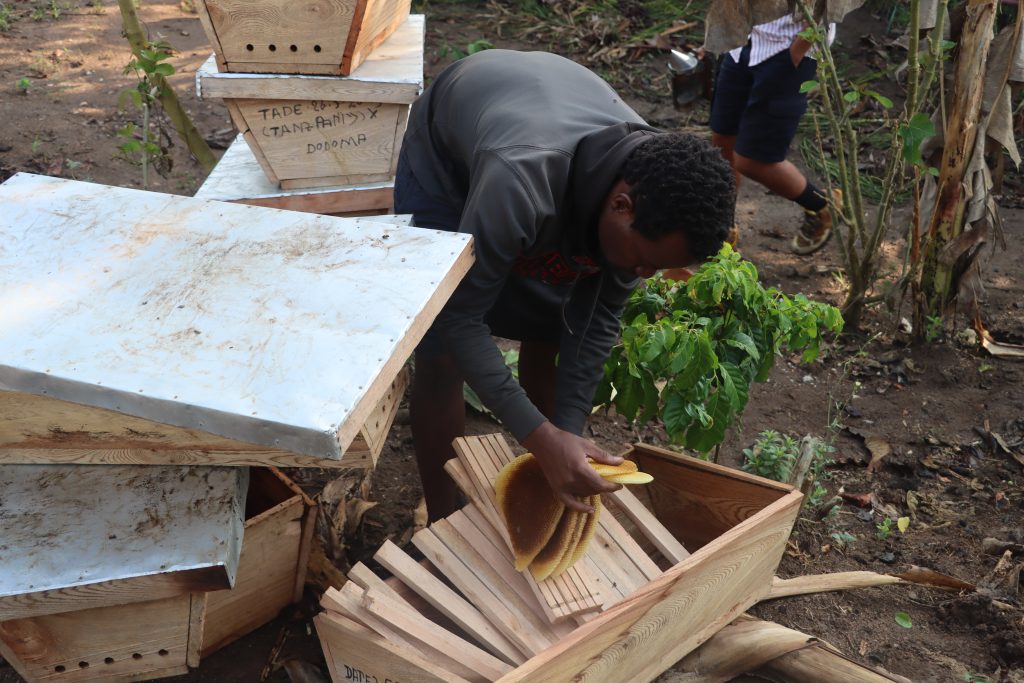
MUBA was created to protect bees, promote eco-friendly beekeeping, restore pollinator habitats and help farmers and young people build sustainable incomes.
Less than three years later, the initiative has grown to 345 members, including 143 women and 116 youth. It has reached 125 beekeepers and households, providing members with access to savings, credit, honey markets, training, equipment and conservation support.
The growth did not happen overnight.
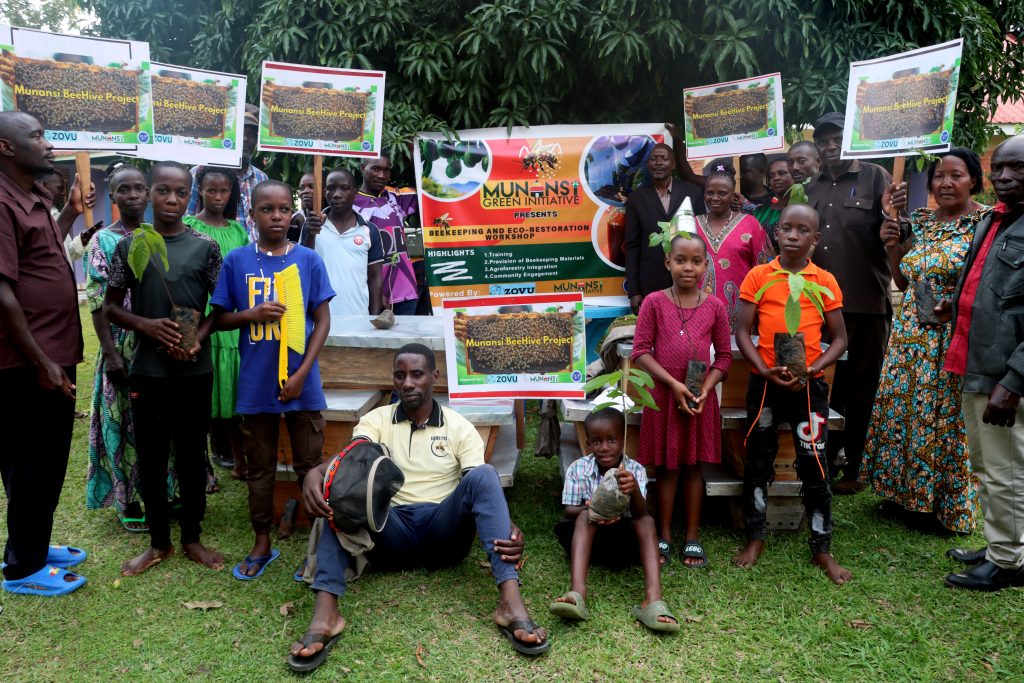
An early beekeeping and ecological workshop reached more than 60 farmers, women and youth. MUBA has since developed into a structured conservation and livelihood initiative with two beekeeping cooperatives and more than 1,200 people trained. Its wider apiary programme has supported 132 beehives.
The work is also showing benefits beyond beekeeping.
At HILBOCO General Farm, one documented site recorded an increase in coffee production from 9 to 13 tonnes annually alongside the apiary work, demonstrating the importance of pollination to agricultural production.
But for MUBA, numbers are only part of the story.
The association is changing how farmers think about bees.
Beekeeping is increasingly being seen not only as a source of honey and income, but also as a way of protecting pollinators, restoring ecosystems and strengthening resilience to climate change.
Farmers are encouraged to protect wild bee colonies and their habitats, plant indigenous trees and flowering plants, and adopt agroforestry and other sustainable land-management practices.
Women and youth are involved in training, conservation and leadership, while farmer groups and cooperatives support savings, hive management, production and market access.
The approach is deliberately community-led.
Farmers help identify the problems and shape the solutions. Local leaders, schools and agricultural extension officers are also involved in mobilisation, awareness and monitoring.
For Crispus, this matters because the initiative is meant to be owned by the community, rather than driven from outside.
The difference can be seen in the experience of young people such as Asiiwme Kenneth.
Before joining MUBA, Kenneth had limited access to structured beekeeping knowledge, modern equipment and organised support.
Through the association, he gained skills and an opportunity to develop beekeeping as a sustainable livelihood.
He is now able to contribute to his family’s needs, pay school fees and invest in his future.
For MUBA Vice Chairperson Tuwesigye Lawernce Atuhire, this is why the association puts bees at the centre of its work.
“Bees are the number one soldiers and heroes of our ecosystems,” he says.
MUBA is now looking beyond production.
Over the next three years, the association plans to establish a bee-products value addition factory to process and package honey, beeswax, propolis and other products locally.
The ambition is to create more jobs, improve market access and increase the value of what farmers produce.
For Crispus, the story has come full circle.
What began as an understanding gained at the Nairobi Summer School has become a practical initiative in his own community.
The lesson was that climate justice is not only about understanding the problem.
It is about giving communities the space and tools to shape the response.
Today, MUBA is doing exactly that — bringing farmers, women and young people together to protect bees, strengthen livelihoods and restore the ecosystems on which their lives depend.
“Today, MUBA means hope, opportunity, conservation, and resilience for our community,” Crispus says.