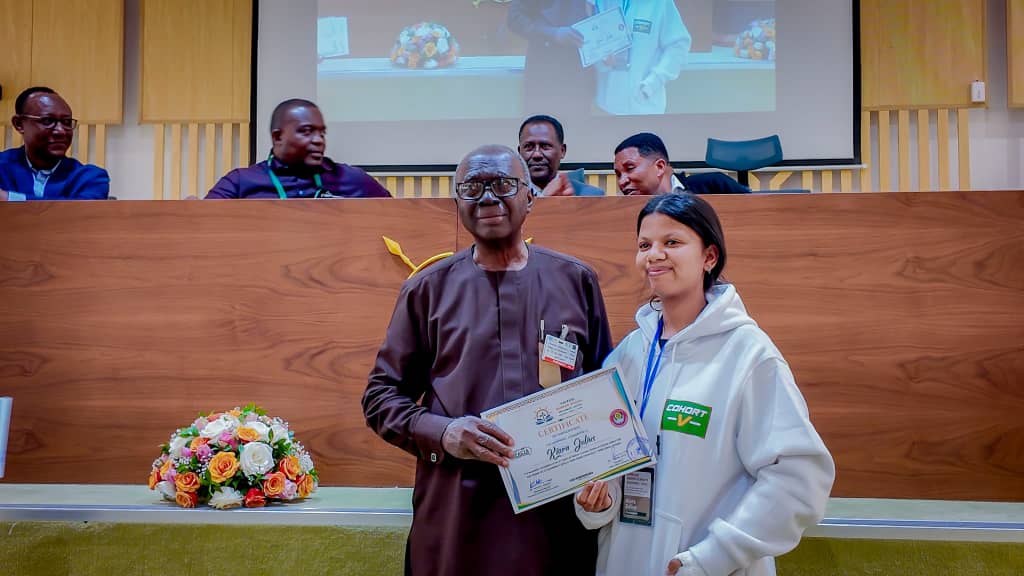
I am Kiara Julius, a student and young woman who has been active in climate and social issues since 2018. I care deeply about the earth, and when one of my mentors nominated me for the Nairobi Summer School on Climate Justice Cohort V (NSSCJ5), it meant more than just an opportunity—it meant that my voice could be heard. It symbolized that change is possible when we come together, and that I could be part of a collective working toward a just and sustainable future.
The sessions at NSSCJ5 expanded my knowledge and sharpened my understanding of climate change and justice. I learned that climate change is about mitigation and adaptation, but climate justice goes deeper—it demands that states and actors not only reduce emissions but also redress the social and historical injustices fueling the crisis. What stood out was the reminder that governments are often not strong enough to stand up in international climate negotiations, but people—especially young people—are rising to demand accountability.
The discussions on climate justice advocacy and communication, climate change and health, inclusion and gender, and responsive climate action inspired me most. I also reflected on the idea that addressing climate change requires global solutions for global problems: cutting greenhouse gases, leaving fossil fuels underground, financing planetary and social survival, and ensuring green technology is managed as a global public good.
A key takeaway for me was how climate change disproportionately affects women and marginalized groups. Women in rural areas are on the frontline—walking long distances for water, farming in uncertain conditions, and bearing the brunt of floods, droughts, and food insecurity. When crops fail or animals die, women and children suffer the most. This reminded me why a feminist approach to climate justice is essential: it places care, equality, and inclusion at the heart of solutions. Without centering these principles, any “transition” will leave the most vulnerable behind.
The just transition and energy access session also revealed the deep inequalities in our energy systems. Africa contributes less than 4% of global carbon emissions but is the most affected continent. At the same time, we face energy poverty—blackouts, fuel price shocks, and dependency on fossil fuels despite our wealth of resources. A fair transition to renewable energy is not just about reducing CO₂ emissions; it is about giving communities reliable, sustainable energy and control over their futures.
This experience shifted my perspective on activism. Engaging with peers from across the continent, I realized the power of solidarity and knowledge sharing. We learned from each other, supported one another, and built a sense of collective purpose. I now see that raising our voices together makes the world listen.
On a personal level, NSSCJ5 motivated me to take my activism further. I want to join other youth organizations fighting for climate justice and start a green project program for schoolchildren and young people in my community. My vision is to train and mentor them as young activists who understand climate change, care for the earth, and demand justice.
One of the most valuable parts of this journey was building connections. Together we explored how to approach challenges, how to support others in their struggles, and how to push forward collective action. The solidarity among participants reminded me that none of us is alone in this fight—we are part of a global movement that crosses borders, cultures, and identities.
The Nairobi Summer School reminded me that change begins with the small things we choose to do and stand for every day. If we want change, we cannot wait—it must start now. Time is running out, but it is never too late to act. By standing together, raising our voices, and committing to justice, we can create a world where people and the planet thrive in harmony.
In the end, the lesson is simple yet powerful: change starts with you, but it becomes unstoppable when we act together.